3.30.2026

The Truth About Hand-Feeding Your Fish

While many hobbyists love the interaction of having their fish approach them for food, I’ve found several compelling reasons to avoid hand-feeding. This post covers my personal experience with the pros and cons of manual versus automated feeding. While hand-feeding is sometimes unavoidable depending on the species you keep, I generally advise against it for the health and safety of both the keeper and the fish.

Why You Should Reconsider Hand-Feeding

While the interaction is tempting, there are three primary risks to keep in mind:

1. Risk of Bacterial Contamination
Introducing bare hands into your aquarium or handling fish food directly can transfer harmful bacteria, oils, or soaps into the water. This can compromise your fish's immune system or disrupt the delicate balance of their habitat.

Pro-Tip: If you must reach into the tank, wear aquarium-safe gloves or use a dedicated scoop to pour food directly into the water.

2. Loss of Natural Survival Instincts

Training fish to associate large, external movements with food can be dangerous. When fish lose their natural fear of movement outside the tank or pond, they may inadvertently approach predators like cats or raccoons, thinking they are about to be fed. Additionally, for high-energy schooling fish, the "feeding frenzy" at the surface can lead to fish jumping out of the aquarium in the excitement.

3. Personal Safety and Physical Injury
If you are keeping predatory or carnivorous species, hand-feeding significantly increases the risk of a bite. Even a small "nip" from a fish can lead to infections or skin irritation for the keeper. Using tools keeps a safe distance between your fingers and their feeding response.

Wound Care Note:
If you do sustain a nip that breaks the skin, immediately wash the area with warm, soapy water and monitor for any unusual redness or swelling over the following weeks.


Here are the main risks you might want to be aware of:

While most fish nips are harmless, any break in the skin while your hands are in aquarium water carries a risk of infection because of the bacteria naturally present in that environment. In the hobby, this is often referred to as "Fish-Handler's Disease" or "Fish Tank Granuloma."

1. Mycobacterium marinum (The most common culprit)
This is a relative of the bacteria that causes tuberculosis. It’s found in both fresh and saltwater. If a fish nips you and breaks the skin, or if you have an existing scratch, this bacteria can enter and cause "Fish Tank Granuloma"—red, crusty bumps or nodules that can take weeks to appear and months to heal.

2. Aeromonas and Vibrio
  • Aeromonas: Frequently found in freshwater tanks. It can cause skin infections or, in rare cases, more systemic issues if it enters a wound.
  • Vibrio: More common in saltwater or brackish setups. Some strains are quite aggressive and can cause rapid swelling and tissue damage if a bite becomes infected.
3. Zoonotic Transfer
Because aquariums are warm, nutrient-rich environments, they are breeding grounds for various microbes. A nip isn't just a physical injury; it's a "dirty" puncture. Even "clean" water contains organic waste and bacteria that don't belong under your skin.

4. Secondary Infections
Even if the fish doesn't carry a specific "aquatic" disease, the wound itself can become a gateway for common bacteria like Staph or Strep that live on your own skin, especially since the wound was "primed" by tank water. 

When Hand-Feeding (or Manual Feeding) is Necessary

Despite the risks, there are specific scenarios where an automated approach simply won't work. In these cases, manual intervention is the only way to ensure your fish stay healthy.

1. Incompatibility with Auto-Feeders
Not all diets are "feeder-friendly." If you are using large pellets, frozen cubes, or specialized gels, an auto-feeder can easily clog or fail to dispense the correct portion. When your fish's nutritional needs require a complex or bulky diet, manual feeding becomes a logistical necessity.

2. Stimulating a Predatory Strike Response
Many carnivorous or predatory species are hardwired to hunt based on movement. If the food doesn't look "alive," they may ignore it entirely, leading to waste and poor water quality.

The Safe Alternative: Instead of using your fingers, use feeding tongs or aquascaping tweezers. This allows you to wiggle the food to mimic prey movement while keeping your hands clear of the "strike zone" and out of the water.

3. Deliberate Interaction and Behavioral Monitoring
If you choose to have your fish approach you for interaction, it should be a conscious decision made with a full understanding of the risks. While it’s tempting to treat a fish like a "water dog," remember that their safety comes first. Manual feeding—even if not done by hand—is the best time to perform a "roll call" and check each fish for signs of illness, stress, or injury that an auto-feeder might overlook.

3.29.2026

Steering Clear of Old Tank Syndrome

You’ve mastered the Nitrogen Cycle, your fish are thriving, and your maintenance routine is on autopilot. However, for many long-term fish keepers, a hidden danger is lurking in the substrate. It’s called Old Tank Syndrome (OTS), and it is the primary reason why "healthy" tanks suddenly start losing fish for no apparent reason.

What Exactly is Old Tank Syndrome?

OTS isn't a disease; it’s a slow, chemical shift in your water parameters. In a closed ecosystem, the very bacteria that keep your fish alive by processing ammonia are also consuming the Carbonates (KH) in your water.
Over months or years, if your water changes aren't frequent enough or large enough to replenish these minerals, your "Buffer" (KH) hits zero.

What's KH?

Gemini said

In the context of your aquarium, Carbonate Hardness (KH), often referred to as "alkalinity," is a measure of the dissolved carbonates and bicarbonates in your water. Think of KH as your tank’s chemical insurance policy. Its primary job is to act as a buffer, absorbing acids that are naturally produced by fish waste and biological filtration.

The Chain Reaction

  1. The pH Crash: Without Carbonates to stabilize the water, your pH will plummet. It’s not uncommon for a tank to drop from a steady 7.2 down to a 5.5 or lower.
  2. Bacterial Dormancy: Nitrifying bacteria—the ones that manage your Nitrogen Cycle—begin to die or go dormant once the pH drops below 6.0.
  3. The Ammonia Spike: With the bacteria "off duty," ammonia begins to climb.

The Paradox: Why are my fish still alive?

This is the most confusing part of OTS because the pH is so low, the toxic Ammonia (NH3) actually converts into Ammonium (NH4), which is significantly less toxic to fish. Your inhabitants slowly "acclimatize" to these worsening conditions.

However, the moment you add a new fish from a store with "clean" water, or you perform a massive 50% water change to "fix" the tank, the pH swings back up. This instantly turns that safe Ammonium back into deadly, burning Ammonia. This is why many hobbyists see their fish die immediately after a cleaning.

Diagnostic Checklist: Do you have OTS?

If your tank has been established for over a year, look for these red flags:
  • Nitrate Levels: Readings consistently over 80–100 ppm.
  • pH Levels: A significantly lower reading than your tap water source.
  • KH Levels: A test result of 0–1° dKH.
  • The "New Fish" Test: New additions die within 24–48 hours, while the old residents seem "fine."

The Professional Recovery Protocol

If you suspect Old Tank Syndrome, do not perform a massive water change. The shock will kill your fish.
  1. Test Your Source Water: Know your baseline pH and Hardness.
  2. Incremental Changes: Perform small 10% water changes every day for two weeks. This slowly raises the pH and mineral content without shocking the inhabitants.
  3. Monitor Ammonia: As the pH rises, the ammonia becomes more toxic. Use a high-quality water conditioner like Hikari Ultimate to detoxify the rising ammonia while your bacteria wake back up.
  4. Vacuum the Substrate: Gently remove accumulated organic waste (mulm) that is fueling the high nitrates, but do it in small sections so you don't stir up too much at once.
Additional Notes:
  • If your pH is within 0.3 of your tap water: You can safely do a standard 20–25% change.
  • If your tank is 0.4 pH lower than your tap water (e.g., your tank is 6.6 and your tap is 7.0): You can technically push it to 15% for a week, but 10% is still the "pro" recommendation for a reason.
  • If your pH is 0.5+ lower than your tap water: Stick to 10% daily for 2 weeks. This allows the fish to slowly "re-acclimatize" to the higher pH and mineral content.

What if the water changes don't work?

If you’ve done 14 days of consistent 10% water changes and that pH still won't stay up, you are dealing with a Buffer Black Hole. Basically, something in your tank is actively "eating" the alkalinity as fast as you’re adding it.

Here is the "Phase 2" checklist for when the two-week protocol isn't enough:


1. The "Mulm" Hunt (Deep Clean)
If your substrate is packed with fish waste (mulm), that decaying organic matter produces constant acid.
  • The Fix: During your 10% daily changes, focus only on vacuuming one small section of the gravel. Don't do the whole tank at once (that would crash your bacteria), but get the "sludge" out of the floor.

2. Check Your "Decor"
Do you have a lot of driftwood or Indian Almond Leaves? These release tannins which naturally lower pH.
  • The Fix: If the pH won't budge, you might need to temporarily remove some wood until the tank stabilizes.

3. Recharge your KH (The "Battery")
pH is the "voltage," but KH (Carbonate Hardness) is the "battery." If your tap water is very soft (low KH), it has no "buffer" to keep the pH from falling again the second the fish breathe.
  • The Fix: You may need to add a small mesh bag of crushed coral or aragonite to your filter. This dissolves slowly and acts like a "time-release" antacid for your tank, keeping the pH from crashing back down.

4. Test the Tap Again
Sometimes, city water changes seasonally.
  • The Fix: Let a cup of tap water sit on your counter for 24 hours with an air stone (or just stir it occasionally), then test it. If your tap water has actually dropped in pH, you'll never "fix" the tank with just water changes. If your tap water’s pH is naturally low or has crashed, you'll need to manually "recharge" its buffering capacity by adding a small mesh bag of crushed coral to your filter to act as a natural, steady antacid for the tank.

1.19.2026

A Guide to the Nitrogen Cycle

A successful freshwater aquarium is more than a display; it is a complex, self-sustaining ecosystem. For a hobbyist, the most critical responsibility is maintaining the "invisible" part of the tank: the Nitrogen Cycle. Understanding this process is the difference between a thriving environment and a failing one.

The Science of Nitrification

The nitrogen cycle is the biological process in which beneficial bacteria convert toxic waste into safer compounds. This is known as biological filtration. These bacteria do not live in the water itself, but colonize the surfaces of your filter media, substrate, and decor.

1. Ammonia (NH3)

Every inhabitant in your aquarium produces waste. As fish respire through their gills and organic matter (like uneaten food) decays, it releases Ammonia.

The Risk: Ammonia is highly toxic. It causes chemical burns to the gills and skin, leading to severe stress and eventual organ failure.

The Solution: In a healthy system, a bacterial colony called Nitrosomonas consumes the Ammonia, converting it into Nitrite.

2. Nitrite (NO2)

Nitrite is the second stage of the cycle. While it is a byproduct of "working" bacteria, it is still a potent toxin.

The Risk: Nitrite enters the fish’s bloodstream and prevents it from carrying oxygen, effectively causing the fish to suffocate regardless of how much oxygen is in the water.

The Solution: A second group of bacteria, Nitrobacter, colonizes the tank to process Nitrite into Nitrate.

3. Nitrate (NO3)

Nitrate is the final byproduct of the nitrification process. It is significantly less harmful than Ammonia or Nitrite, but it is not benign.

The Management: In the closed environment of an aquarium, Nitrate levels will continually rise. Because there are rarely enough anaerobic conditions to convert Nitrate into gas, it must be removed through regular water changes.

The Ideal: Aim to keep Nitrates below 20–40 ppm to ensure long-term health and prevent algae outbreaks.

Professional Management Protocols

To ensure your biological filter remains stable, follow these essential guidelines:

Maintain the Bio-Media: Your filter media houses the majority of your tank’s beneficial bacteria. To avoid a "cycle crash," never rinse your sponges or ceramic rings in untreated tap water, as chlorine will sterilize the colony. You should rinse the media in either a container of dechlorinated tap water or water removed from the aquarium. If you are concerned about a dip in bacterial activity, adding a supplemental dose of beneficial bacteria or a high-quality water conditioner during maintenance provides an extra layer of safety.

Avoid Overloading: Adding too many fish at once creates a "bio-load" that the existing bacteria cannot process fast enough. Always introduce new inhabitants gradually to allow the bacterial colonies to scale up naturally.

Test Regularly: A tank is officially "cycled" when your test results consistently show 0 ppm Ammonia and 0 ppm Nitrite, with a measurable reading of Nitrate.

Essential Equipment Checklist

1. Water Testing Kit (The Most Important Tool)

You cannot see ammonia or nitrite. A liquid test kit is generally more accurate than paper strips.
  • Recommendation: A master test kit that measures Ammonia (NH3), Nitrite (NO2), Nitrate (NO3), and pH.
  • Why: This is the only way to know exactly which stage of the cycle you are in.

2. Water Conditioner (Dechlorinator)

Before starting the nitrogen cycle, you must understand the chemistry of the water you are using. Every water source presents different challenges:
  • Municipal Tap Water: Treated with chlorine or chloramines which act as biocides that will instantly destroy your beneficial bacteria.
  • Well Water: Generally chlorine-free, but can contain high minerals, heavy metals, or existing nitrates.
  • Home Filtration Systems: RO systems or softeners alter hardness and chlorine but may strip out essential minerals bacteria need.
The Professional Standard: Never assume your water is safe. Always use a high-quality water conditioner and test your source water before it enters the aquarium. A lot of people like Seachem Prime, but I prefer Hikari Ultimate as I find Prime has a nauseating smell.
  • Pro-Tip: Look for water conditioners that "detoxify" ammonia and nitrite for 24–48 hours rather than removing them entirely. This keeps the water safe for fish while allowing the bacteria to "eat" and grow.
  • What to Avoid: Do not use Aquarium Salt or Zeolite during the initial cycling process. Aquarium Salt acts as a cleaning agent that slows bacterial growth; Zeolite removes the ammonia your bacteria need to survive, effectively stalling the cycle.
  • The Golden Rule: You can use salt for treatments or Zeolite for emergencies on an established aquarium later. However, never use them together. Salt recharges Zeolite, causing it to instantly dump all trapped ammonia back into your water.

3. An Ammonia Source

The bacteria need "food" to grow. If there is no ammonia, the cycle will never start.
  • Options: Pure "Reagent Grade" Ammonium Chloride, a very small number of hardy fish, or a daily pinch of fish food.

4. Biological Filter Media

Bacteria need a "house" to live in. Use high-porosity media like ceramic rings, bio-foams, or lava rocks to provide maximum surface area for the colonies to grow.

5. Bottled Beneficial Bacteria (Optional but Recommended)

"Seeding" the tank can significantly speed up the process. Add this directly into the filter. I personally like Seachem Stability.

6. A Consistent Heat Source

Nitrifying bacteria are living organisms that grow faster in stable, warm water.
  • Requirement: An adjustable aquarium heater.
  • Goal: Keep the water between 75°F–82°F (24°C–28°C). Note: Research the specific requirements of the fish you purchase, as they have varied preferences.

1.07.2026

Twenty Years of Rescues That Weren't

For nearly two decades, millions flocked to the Georgia Aquarium, marveling at the majestic whale sharks gliding through the Ocean Voyager exhibit. When Taroko, one of their iconic males, was euthanized in August 2025, the aquarium, as expected, issued a statement about his long life and the scientific contributions he made as an "ambassador" for his species.

But what if I told you that the story of Taroko and his fellow captive whale sharks is far more complex, riddled with a profound irony that stretches across oceans, costs millions, and continues to fuel a heated ethical debate? Let's dive deep into the true cost of "saving" a whale shark.

The "Rescue": A Last-Minute Leap Before the Ban

The narrative spun by the Georgia Aquarium has always been one of rescue: these magnificent creatures were plucked from certain death in Taiwanese fish markets. And to a degree, this is true. In the early 2000s, Taiwan had a legal quota for whale shark harvests, where these gentle giants were destined for meat markets. When the aquarium acquired its first sharks, including Taroko and Yushan, they were indeed facing the butcher's knife.

However, the timing of their acquisition, particularly Taroko's, reveals a strategic maneuver more than a spontaneous act of mercy. By early 2007, the Taiwanese government had announced a full ban on whale shark capture, sale, and export, effective January 1, 2008. The aquarium, fully aware of this closing window, made a deliberate "leap." Taroko and Yushan arrived in Atlanta in June 2007 – just six months before the ban would have made their acquisition impossible.

This wasn't a desperate dash to save a single stranded animal; it was a carefully executed, multi-million dollar commercial transaction, leveraging the last legal opportunity to stock one of the world's most impressive exhibits.

The Multi-Million Dollar Paradox: Cost vs. Conservation

Let’s talk numbers, because this is where the irony truly bites.

The logistical feat of transporting these behemoths—requiring custom-built, 25-ton tanks and a modified Boeing 747 cargo jet—cost an estimated $1 million to $2 million per pair of sharks. This doesn't even include the purchase price from the Taiwanese fishermen or the ongoing operational costs of feeding, filtering, and maintaining a 6.3-million-gallon exhibit for two decades.

Now, consider the alternative: At that same time, retrofitting a single Taiwanese fishing net with "escape hatches" for whale sharks costs less than $5,000. So, for the price of flying just one shark to Atlanta, the aquarium could have funded modifications for 60 to 70 nets, potentially saving dozens, if not hundreds, of wild sharks from entanglement – the very fate that led to their market capture.

The Georgia Aquarium, like many institutions, does fund field conservation. However, their tax filings often reveal that the vast majority of their "conservation" budget is directed towards the internal care of their own animals and exhibits, rather than direct, impactful efforts to save wild populations. The economics are clear: one "ambassador" in a tank generates millions in ticket sales; hundreds of saved sharks swimming freely in the ocean do not.

The "Non-Releasable" Loophole: Jebbie's Story

The argument for captivity often hinges on the idea that these sharks become "non-releasable" after years in captivity. They supposedly lack the muscle tone for deep-sea diving, the navigation skills for migration, and the foraging instincts to survive.

But then there's Jebbie. Acquired in 2021, Jebbie was the first whale shark brought to the aquarium in 14 years, long after the Taiwanese ban. He was touted as a true "rescue," found entangled in a net and deemed "unfit for release." Yet, this shark—too injured to survive in the wild—was strong enough to endure a 30-hour, 8,000-mile journey in a specially outfitted cargo plane, constantly monitored by vets and life support systems.

The glaring contradiction highlights the ethical tightrope aquariums walk. If a shark is robust enough to survive such an arduous journey, was it truly too fragile to be released locally after careful rehabilitation? Or was the "non-releasable" label a convenient justification for filling an exhibit that had dwindled to just two sharks after the deaths of Alice and Trixie in 2020-2021?

The Inadequate Habitat: Why Even 6 Million Gallons Isn't Enough

The scientific data supports this skepticism. While the Ocean Voyager exhibit is a technological marvel, it is fundamentally inadequate for a whale shark.

  • Muscle Atrophy: Wild whale sharks are constant, long-distance swimmers, diving thousands of feet. In a tank, they swim repetitive circles, leading to asymmetrical muscle development and chronic physical stress. Blood analysis reveals higher levels of creatine phosphokinase (CPK), indicating muscle damage, and elevated cortisol (a stress hormone) in captive sharks.
  • Lost Instincts: Crucial homarine levels, vital for cellular health in the deep ocean, plummet in captivity. Their gut microbiome shifts, losing microbes essential for deep-diving and nutrient processing. Their natural navigation and foraging instincts atrophy.

  • Life Expectancy: In the wild, whale sharks can live up to 70-150 years. In captivity, the record is just 26 years. Taroko, at 18 years in the tank, died far short of his natural lifespan.

The claim that a tank is "adequate" is often based on the shark simply being alive and appearing calm to visitors, not on its complex biological needs.

The Lasting Legacy: A Call for True Conservation

With Taroko's passing in 2025, and only Yushan and Jebbie remaining (likely the last whale sharks the Georgia Aquarium will ever acquire due to heightened international protections), the institution is at a critical juncture.

The "300 annual deaths" in Taiwan that once made headlines are finally starting to decrease, not because sharks are being flown to Atlanta, but because conservationists are working with local fishermen to implement real-time reporting systems and outfit nets with escape hatches. This demonstrates that on-site, proactive conservation is far more effective and ethical than expensive, long-distance "rescues" that prioritize display over true freedom.

Taroko provided valuable scientific data and inspired millions. But his life, and the lives of the other captive whale sharks, serve as a stark reminder: the act of "saving" an individual from a market, only to place it in an environment that ultimately shortens its life and renders it biologically unfit for the wild, is a complex ethical dilemma. It's a costly paradox that, for many, underscores the difference between rescue for display and true, systemic conservation.

It’s time to ask: Is paying millions for a "billion-dollar whale shark" truly conservation, or is it merely a financially lucrative way to fill a tank, leaving the real problems of the ocean largely unaddressed?

8.11.2017

Aquarium Updates and DIY's

Lately, I have had a few aquarium mishaps, the first being that I managed to crush my glass intake tube as I was trying to pull it apart from the tubing. That said, there has to be an easier way to separate those two pieces so if anyone has any tips on that please leave me a comment below and let me know as I have yet to see anything on that topic. Luckily, I didn't manage to cut myself as the tube shattered in my hand (I felt as if I was the Hulk that day) and I had kept the plastic intake tube that came with my canister filter originally so I will now have to use that one in the mean time.
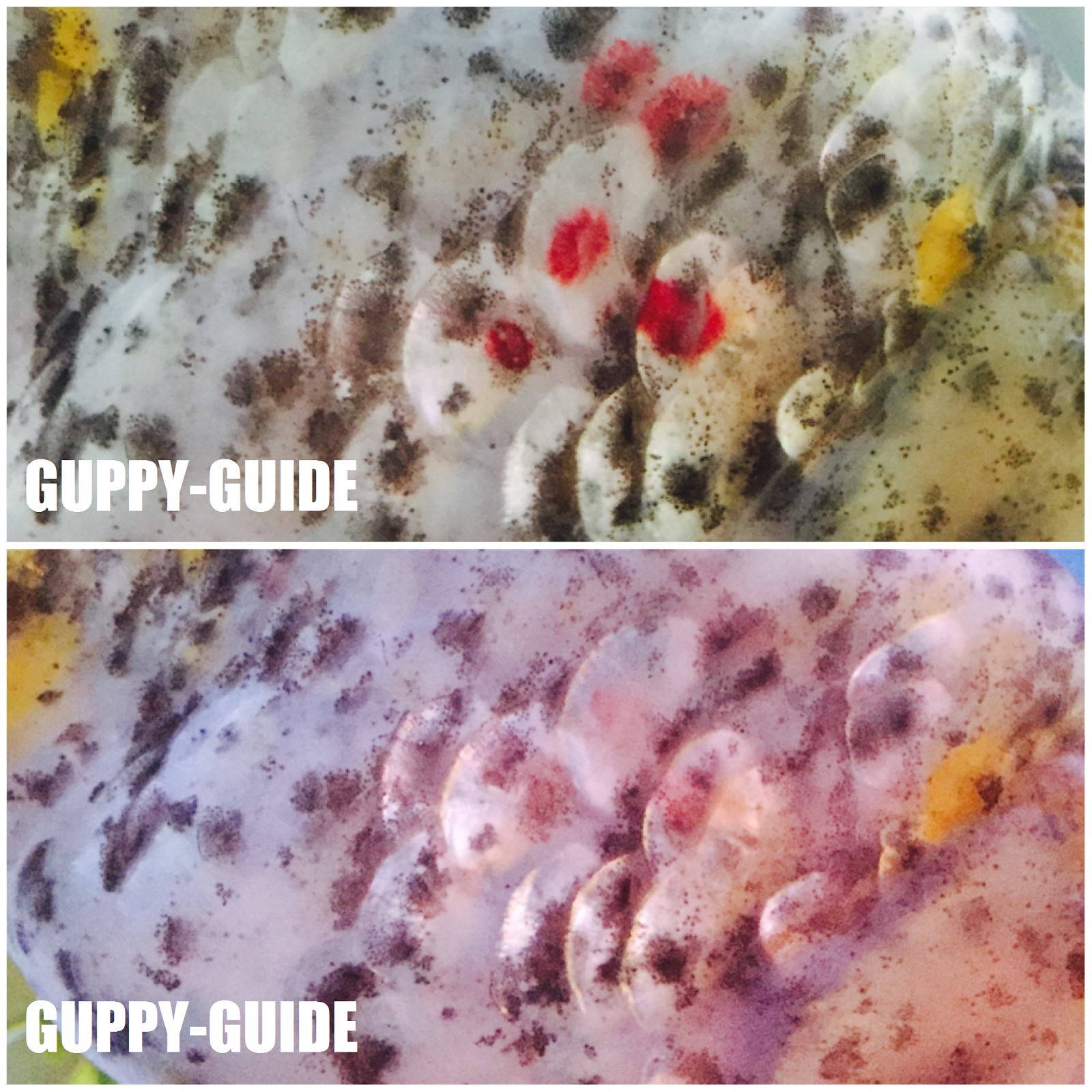
Red spots on Ramen - before (top image) and after (bottom image)
For those of you that don't follow me on IG I have lost 2 of my goldfish recently (Pocky and Ramen) due to some red spot/sore problem (as seen in the photo here). The size of these red sore looking spots would range from half an inch in size to smaller dots, and it was not caused by anything hurting them in the tank. Honestly, I probably could've prolonged their lives by not removing them from my main tank and placing them in 5g buckets for treatment but I didn't want to risk further harming my healthier looking fish and after months of trying to remedy this, I figured it was time to let them go (Ramen was basically stuck on her side for a month and began having trouble eating so, I didn't want to prolong that any longer). I'm not even sure what this is as I haven't been able to find many photos in which to identify this. I believe this may be VHS (Viral Hemorrhagic Septicemia), but I could be wrong as I have never dealt with this before. I tried tons of different medications, etc and I failed with all of them. Whatever this is, it's definitely highly contagious for my goldfish (not sure about other fish as this is just a goldfish tank currently). I noticed when I did my large weekly water changes it often would clear up a bit but over the course of a week it would reappear but the red spots would jump to random places on the body (not really the tail or head area). Sometimes there would be an almost grayish scab that would appear in the center but not always, which you may think is a parasite but I don't believe that was the case (I even dosed with Prazi). Whatever it is I believe to be an internal virus of some kind (I'm not a vet but that's just my best guess) and both fish suffered from Swim Bladder Disease before that occurred.

I am beginning to feel as though fish that end up with Swim Bladder Disease are more susceptible to having secondary issues. Perhaps a weak swim bladder could be a sign of a weak immune system (or SBD weakens a fish in general). It just seems little is known on how to remedy true Swim Bladder Disease without the aid of surgery and the fact it's called a disease makes me want to relate it more to a poor immune system which may have been affected by certain medications, or it could just be a heredity issue. I know some aquarists feel SBD can be remedied with diet change but I feel those results are temporary from my experience, and a major SBD issue won't truly be resolved by diet alone.

Also, I finally got around to trying out my Virkon tablets which are better at killing nasties than bleach and I will say that... it's not that bad. It does have a slight odor to it but I don't find it nearly as offensive as bleach or ammonia. Also, someone mentioned to me that they stopped using this product because it is corrosive, and actually in its powder/tablet form it is corrosive but once you get it to a 1% dilution in water (1 tablet + 1 pint of water) it is no longer considered corrosive (according to the label). Personally, I really like this product thus far as it doesn't seem to leave any residue as with bleach, but I would avoid using it directly on anything metal or electronic just to be on the safe side in terms of corrosiveness (the same can be said for products like Windex). 
Carpet mold from the tank when I started scrubbing it out.
As for my last mishap I learned that if you're using an untreated wood stand of some kind for your aquarium and it has an entirely flat base that rests on your carpet (I was using the top of a wood hutch) than you are basically asking for a mold problem. If any water goes near your carpet, overtime that moisture will creep under the wood base and thus you're very likely to end up with some mold, which was my experience this week. I ended up with some dry black splotchy looking mold and the best way I found to clean up this mess (first dispose of the moldy tank stand and find something better if possible) is to make an ammonia dilution (2 capfuls of ammonia per 1 gallon of water). Using an abrasive brush scrubber you'll than scrub over the carpet in circular motions with the ammonia mixture until the mold coloration removes (or is killed rather) and then you'll repeat this with some clean water. Next use a wet/dry vacuum to suck out the water from the carpet (and its surrounding areas) and then use a fan to help further dry out the area. The carpet may require an additional cleaning after this initial one has had time to dry out as it could still be a bit discolored.

That's all I have to share for this week and I have been super busy lately (hence the lack of posts) but I am working on putting together some new posts before I start back up at University the end of the month so do come by again soon!

6.02.2017

Proper Aquarium Size for a Betta

Often I find people wanting to put a betta fish in any type of tiny vase looking object around, and while you may be able to keep a betta fish alive in something like that, it may not be the healthiest of habitats for your betta. Now read closely as I am about to divulge to you my discovery on what size tank you should actually have for a betta fish. The minimum size tank you should have for a single betta fish is... 10 gallons! If you're thinking this is too big for a betta fish than hear me out.

If you have ever put a betta fish in a 20-gallon breeder tank (or perhaps larger) than monitor the betta's swim pattern by measuring its distance swam before it pauses. I found that a betta fish will swim close to half the length of a 20-gal breeder tank before it pauses briefly and continues swimming again at about this same distance every time. Which makes a 10-gal aquarium the ideal size in length for a betta fish. Now, this probably seems like it's a very roomy tank for a betta, but you can try adding a few smaller fish into this setup as well because let's not forget that a 10-gal tank also has width and height to it. While my betta was also in this bigger 20-gallon tank for over a month I also discovered its fins began to grow out more, which was not something I had ever seen happen before with a betta fish kept in these 3-gallon (or smaller) environments, and to myself that's even further reasoning as to why a betta shouldn't be kept in a tiny environment (a bigger environment will generally have more stable conditions as well).

Betta's I would say are close to 2-inches in length at adult size, which means you may be able to get away with adding several neon tetra's which are about 1-inch in length (be sure to do research on tank mates for your betta because they don't get along well with numerous types of other fish such as other betta fish, guppies, goldfish, etc.). There may be some exceptions to this rule of tank mates, but I prefer not to risk it as it can cause fish injury, death, or having to return tank mates. An aquarium should be fairly stress-free for all its inhabitants.

You should be able to find a 10-gallon aquarium for a mere $10 in-store at Petco (they have a $1 per gallon sale about twice a year and I found select Petco's may always carry the 10-gal's for $10), and it's money well spent for a healthy betta fish habitat. You can also find inexpensive secondhand aquariums from Craigslist, LetGo, local antique shops, and sometimes even yard sales. In terms of cost for aquariums, I generally stick with the $1 per gallon rule, and no more than $4 per gallon for larger used aquariums (if the aquarium has a lid, etc. than obviously, the cost will be a bit more).