Showing posts with label Ammonia. Show all posts

1.19.2026

A Guide to the Nitrogen Cycle

A successful freshwater aquarium is more than a display; it is a complex, self-sustaining ecosystem. For a hobbyist, the most critical responsibility is maintaining the "invisible" part of the tank: the Nitrogen Cycle. Understanding this process is the difference between a thriving environment and a failing one.

The Science of Nitrification

The nitrogen cycle is the biological process in which beneficial bacteria convert toxic waste into safer compounds. This is known as biological filtration. These bacteria do not live in the water itself, but colonize the surfaces of your filter media, substrate, and decor.

1. Ammonia (NH3)

Every inhabitant in your aquarium produces waste. As fish respire through their gills and organic matter (like uneaten food) decays, it releases Ammonia.

The Risk: Ammonia is highly toxic. It causes chemical burns to the gills and skin, leading to severe stress and eventual organ failure.

The Solution: In a healthy system, a bacterial colony called Nitrosomonas consumes the Ammonia, converting it into Nitrite.

2. Nitrite (NO2)

Nitrite is the second stage of the cycle. While it is a byproduct of "working" bacteria, it is still a potent toxin.

The Risk: Nitrite enters the fish’s bloodstream and prevents it from carrying oxygen, effectively causing the fish to suffocate regardless of how much oxygen is in the water.

The Solution: A second group of bacteria, Nitrobacter, colonizes the tank to process Nitrite into Nitrate.

3. Nitrate (NO3)

Nitrate is the final byproduct of the nitrification process. It is significantly less harmful than Ammonia or Nitrite, but it is not benign.

The Management: In the closed environment of an aquarium, Nitrate levels will continually rise. Because there are rarely enough anaerobic conditions to convert Nitrate into gas, it must be removed through regular water changes.

The Ideal: Aim to keep Nitrates below 20–40 ppm to ensure long-term health and prevent algae outbreaks.

Professional Management Protocols

To ensure your biological filter remains stable, follow these essential guidelines:

Maintain the Bio-Media: Your filter media houses the majority of your tank’s beneficial bacteria. To avoid a "cycle crash," never rinse your sponges or ceramic rings in untreated tap water, as chlorine will sterilize the colony. You should rinse the media in either a container of dechlorinated tap water or water removed from the aquarium. If you are concerned about a dip in bacterial activity, adding a supplemental dose of beneficial bacteria or a high-quality water conditioner during maintenance provides an extra layer of safety.

Avoid Overloading: Adding too many fish at once creates a "bio-load" that the existing bacteria cannot process fast enough. Always introduce new inhabitants gradually to allow the bacterial colonies to scale up naturally.

Test Regularly: A tank is officially "cycled" when your test results consistently show 0 ppm Ammonia and 0 ppm Nitrite, with a measurable reading of Nitrate.

Essential Equipment Checklist

1. Water Testing Kit (The Most Important Tool)

You cannot see ammonia or nitrite. A liquid test kit is generally more accurate than paper strips.
  • Recommendation: A master test kit that measures Ammonia (NH3), Nitrite (NO2), Nitrate (NO3), and pH.
  • Why: This is the only way to know exactly which stage of the cycle you are in.

2. Water Conditioner (Dechlorinator)

Before starting the nitrogen cycle, you must understand the chemistry of the water you are using. Every water source presents different challenges:
  • Municipal Tap Water: Treated with chlorine or chloramines which act as biocides that will instantly destroy your beneficial bacteria.
  • Well Water: Generally chlorine-free, but can contain high minerals, heavy metals, or existing nitrates.
  • Home Filtration Systems: RO systems or softeners alter hardness and chlorine but may strip out essential minerals bacteria need.
The Professional Standard: Never assume your water is safe. Always use a high-quality water conditioner and test your source water before it enters the aquarium. A lot of people like Seachem Prime, but I prefer Hikari Ultimate as I find Prime has a nauseating smell.
  • Pro-Tip: Look for water conditioners that "detoxify" ammonia and nitrite for 24–48 hours rather than removing them entirely. This keeps the water safe for fish while allowing the bacteria to "eat" and grow.
  • What to Avoid: Do not use Aquarium Salt or Zeolite during the initial cycling process. Aquarium Salt acts as a cleaning agent that slows bacterial growth; Zeolite removes the ammonia your bacteria need to survive, effectively stalling the cycle.
  • The Golden Rule: You can use salt for treatments or Zeolite for emergencies on an established aquarium later. However, never use them together. Salt recharges Zeolite, causing it to instantly dump all trapped ammonia back into your water.

3. An Ammonia Source

The bacteria need "food" to grow. If there is no ammonia, the cycle will never start.
  • Options: Pure "Reagent Grade" Ammonium Chloride, a very small number of hardy fish, or a daily pinch of fish food.

4. Biological Filter Media

Bacteria need a "house" to live in. Use high-porosity media like ceramic rings, bio-foams, or lava rocks to provide maximum surface area for the colonies to grow.

5. Bottled Beneficial Bacteria (Optional but Recommended)

"Seeding" the tank can significantly speed up the process. Add this directly into the filter. I personally like Seachem Stability.

6. A Consistent Heat Source

Nitrifying bacteria are living organisms that grow faster in stable, warm water.
  • Requirement: An adjustable aquarium heater.
  • Goal: Keep the water between 75°F–82°F (24°C–28°C). Note: Research the specific requirements of the fish you purchase, as they have varied preferences.

8.11.2017

Aquarium Updates and DIY's

Lately, I have had a few aquarium mishaps, the first being that I managed to crush my glass intake tube as I was trying to pull it apart from the tubing. That said, there has to be an easier way to separate those two pieces so if anyone has any tips on that please leave me a comment below and let me know as I have yet to see anything on that topic. Luckily, I didn't manage to cut myself as the tube shattered in my hand (I felt as if I was the Hulk that day) and I had kept the plastic intake tube that came with my canister filter originally so I will now have to use that one in the mean time.
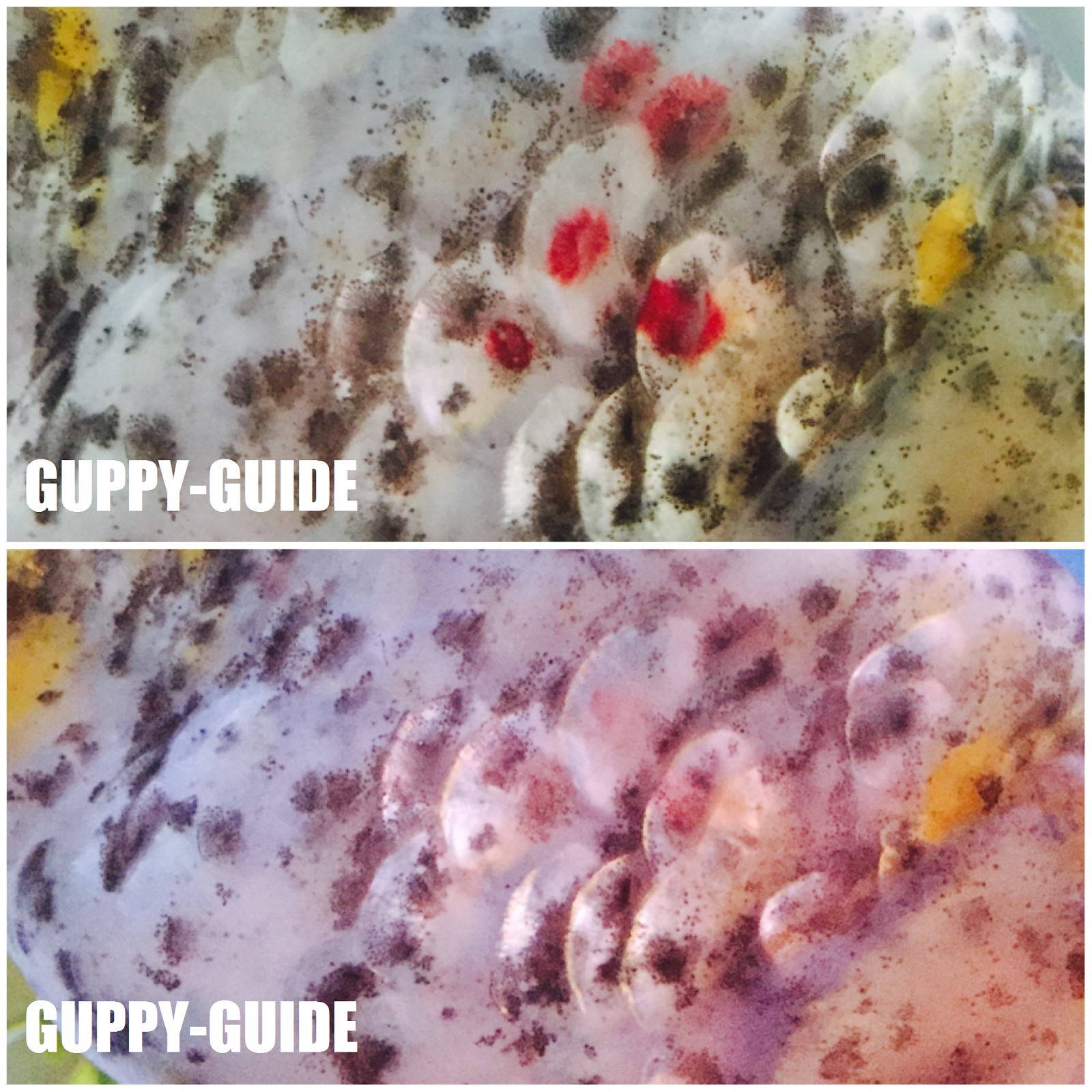
Red spots on Ramen - before (top image) and after (bottom image)
For those of you that don't follow me on IG I have lost 2 of my goldfish recently (Pocky and Ramen) due to some red spot/sore problem (as seen in the photo here). The size of these red sore looking spots would range from half an inch in size to smaller dots, and it was not caused by anything hurting them in the tank. Honestly, I probably could've prolonged their lives by not removing them from my main tank and placing them in 5g buckets for treatment but I didn't want to risk further harming my healthier looking fish and after months of trying to remedy this, I figured it was time to let them go (Ramen was basically stuck on her side for a month and began having trouble eating so, I didn't want to prolong that any longer). I'm not even sure what this is as I haven't been able to find many photos in which to identify this. I believe this may be VHS (Viral Hemorrhagic Septicemia), but I could be wrong as I have never dealt with this before. I tried tons of different medications, etc and I failed with all of them. Whatever this is, it's definitely highly contagious for my goldfish (not sure about other fish as this is just a goldfish tank currently). I noticed when I did my large weekly water changes it often would clear up a bit but over the course of a week it would reappear but the red spots would jump to random places on the body (not really the tail or head area). Sometimes there would be an almost grayish scab that would appear in the center but not always, which you may think is a parasite but I don't believe that was the case (I even dosed with Prazi). Whatever it is I believe to be an internal virus of some kind (I'm not a vet but that's just my best guess) and both fish suffered from Swim Bladder Disease before that occurred.

I am beginning to feel as though fish that end up with Swim Bladder Disease are more susceptible to having secondary issues. Perhaps a weak swim bladder could be a sign of a weak immune system (or SBD weakens a fish in general). It just seems little is known on how to remedy true Swim Bladder Disease without the aid of surgery and the fact it's called a disease makes me want to relate it more to a poor immune system which may have been affected by certain medications, or it could just be a heredity issue. I know some aquarists feel SBD can be remedied with diet change but I feel those results are temporary from my experience, and a major SBD issue won't truly be resolved by diet alone.

Also, I finally got around to trying out my Virkon tablets which are better at killing nasties than bleach and I will say that... it's not that bad. It does have a slight odor to it but I don't find it nearly as offensive as bleach or ammonia. Also, someone mentioned to me that they stopped using this product because it is corrosive, and actually in its powder/tablet form it is corrosive but once you get it to a 1% dilution in water (1 tablet + 1 pint of water) it is no longer considered corrosive (according to the label). Personally, I really like this product thus far as it doesn't seem to leave any residue as with bleach, but I would avoid using it directly on anything metal or electronic just to be on the safe side in terms of corrosiveness (the same can be said for products like Windex). 
Carpet mold from the tank when I started scrubbing it out.
As for my last mishap I learned that if you're using an untreated wood stand of some kind for your aquarium and it has an entirely flat base that rests on your carpet (I was using the top of a wood hutch) than you are basically asking for a mold problem. If any water goes near your carpet, overtime that moisture will creep under the wood base and thus you're very likely to end up with some mold, which was my experience this week. I ended up with some dry black splotchy looking mold and the best way I found to clean up this mess (first dispose of the moldy tank stand and find something better if possible) is to make an ammonia dilution (2 capfuls of ammonia per 1 gallon of water). Using an abrasive brush scrubber you'll than scrub over the carpet in circular motions with the ammonia mixture until the mold coloration removes (or is killed rather) and then you'll repeat this with some clean water. Next use a wet/dry vacuum to suck out the water from the carpet (and its surrounding areas) and then use a fan to help further dry out the area. The carpet may require an additional cleaning after this initial one has had time to dry out as it could still be a bit discolored.

That's all I have to share for this week and I have been super busy lately (hence the lack of posts) but I am working on putting together some new posts before I start back up at University the end of the month so do come by again soon!

11.20.2013

Combating Ammonia

If you have ammonia (NH3) in your aquarium it may be due to a new aquarium setup that has not yet completed the "tank cycling process" AKA "new tank syndrome", which means that your aquarium has not yet developed enough beneficial bacteria to sustain the new aquariums environment. It could also be poor water quality (dirty, lots of debris, dead fish, fecal matter, etc). No matter the true reason for the ammonia levels I find the best remedy for combating ammonia issues is to do 25-50% water changes 1-2 times a week or as needed  (there are also aquarium products on the market which claim to remove ammonia, but I have yet to find one that gave me instant success), and try to at least keep the ammonia levels in a safe range during this period. Once your aquarium becomes established (which can sometimes take months) the ammonia level should reach 0, and this is the ideal level to be at.

Below are some questions I've been asked about ammonia, and if you have anymore questions you'd like to ask feel free to write me in the comment section below.
---------------------------------------------
Question: Does 'Seachem Prime' show traces of ammonia when using ammonia test-strips in water?

Answer: I tried this using the 'API Ammonia test-strips' on my aquarium tap water as well as bottled water with the appropriate amount of 'SeaChem Prime' in them over the course of several days, and the results were negative.
---------------------------------------------
Question: Does 'Aquarium Salt' remove ammonia?

Answer: I tried using 'Aquarium Salt' to remove ammonia that was in an unestablished aquarium and this did not work over 24hrs later, if anything my ammonia readings seemed to get higher... which may not be all too surprising since 'Aquarium Salt' can be used to clean an aquarium (hence, possibly killing some beneficial bacteria??).

So it may actually be possible that if your aquarium was established and now has ammonia in it from being overly dirty than 'Aquarium Salt' may actually help the ammonia levels, but I have not tested that out yet.

9.23.2013

Treating Ich on Ranchu

This past week I made a big mistake thinking that my ranchu would be fine in a temporary bucket of water while I cleaned out the aquarium. Well, it took me awhile to get around to actually cleaning my tank so I transferred my ranchu into a new bucket of water and they ended up going through a drastic temperature change (ranchu can only handle around a 3-5F temperature change at time) and thus suffered from it. Bumblez is not at all a fan of cold water and thus he began slowing down his swimming, while Oakki had broke-out in ich on the front of his wen. Luckily I was able to remedy both of them at the same time, here's how I cured and treated the ich in under 3 days (be sure to treat ich ASAP)...

1: Do at least a 50% water change to the aquarium water (be sure the new water added in is within 3-5F of the current tank water temperature), and treat the water with Seachem Prime according to directions (Seachem Prime helps reduce stress, helps slime coating, and dechlorinates water).

2: Keep the water temp in the aquarium around 74-76F (I use an Aqueon heater), as this seems to be an ideal temperature for ranchu in general.

3: Add 1-TBSP of Aquarium Salt (I used the Jungle brand) per 8-10 gallons of water (aquarium salt reduces stress, provides electrolytes, and cleans.. it may also raise your pH so be sure to dose accordingly). Although it may not be necessary, I added in a pinch of aquarium salt everyday after this initial dose until my ranchu no longer showed signs of ich.

4: Turn off any aquarium lighting to reduce any stress caused by glare, etc as these fish have already undergone enough stress at this point.

5: Be sure to run an air diffuser in your aquarium (along with a 24/hr running filtration system) for at least several hours a day to insure the fish are getting plenty of oxygen in the water (this is very important if you are using any other water treatments to remedy your fish outside of what I have on this post), this is especially important for smaller aquariums and/or ones with a higher temperature.

I hope my ranchu ich remedy works for others just as well as it did for my ranchu, and be sure to do another 50% water change a few days after having done the first one as to reduce the risk of having ich spread, etc (just be sure the new water you're adding into your aquarium is in the ideal temperature range as I mentioned before, too drastic a change may only worsen or cause the ich to reoccur). Good/adequate water quality can solve a lot of problems (be sure ammonia levels are also in a safe range, preferably no traces of ammonia, this is especially important if you have a small or overcrowded aquarium).

9.16.2011

How to Remove Nitrite


Nitrite NO2 Ion
After having cleaned out my entire 10gal aquarium (as you may have seen from my previous posts) and replacing all the gravel substrate I didn't check my water quality since I had ran out of test strips and had added my male guppies to the tank within 24hrs I believe (obviously the tank needed to cycle). Well, that resulted in losing one of my male guppies after a few days (the reason why my guppies weren't being active in the first place) and luckily I was able to move my 2 remaining male guppies back into there old aquarium with the females and they made a speedy full recovery in 1-3days.

So now that I have test strips I realized, yes, I did have a nitrite issue (no ammonia though in case you were wondering). The only time I ever have a nitrite issue is when I replace the substrate. Generally I'd clean the entire tank out again (rinsing all the decor and such as well) and it would rid me of my nitrite issue (which sounds weird but it has worked for me in the past). So I decided I didn't want to go through the headache of cleaning my tank out again and wanted to find a product that could rid my tank of nitrite (as my nitrite level ranged from 0.5 - 3.0).

I was extremely skeptical I'd even find a product that could actually eliminate nitrite, especially having really hard well-water, which is generally pretty stubborn to alter. So, I went into PetSmart having no luck finding what I had initially been looking for and then I finally found ONE product in the whole store that day (which happened to be a bit pricey as well), it being my only option without having to go on a major product hunt I purchased a small bottle of... Tetra SafeStart.

I got home, followed the directions... removed the carbon filter, shook the bottle of Tetra SafeStart and poured in 1/3 of the bottle into my 10gal tank. Less then 10hrs later I tested the water and...NO nitrite whatsoever! It's seriously a miracle product which I can now recommend to you if you're battling nitrite. This product also claims to remove ammonia although, I had no ammonia so I'm not sure if it will combat that or not.

*Update* It has been months now since using Tetra SafeStart and I have not had a nitrite issue since I first began using this product. I know how some products can seem to work for a very short time (if at all) but that was not an issue when I used this. Or it is possible this product worked long enough for my tank to catch up in the cycling process before this product could have possibly ever worn off. So, I still really recommend trying this if you're having similar issues as I did because it worked perfectly for me.